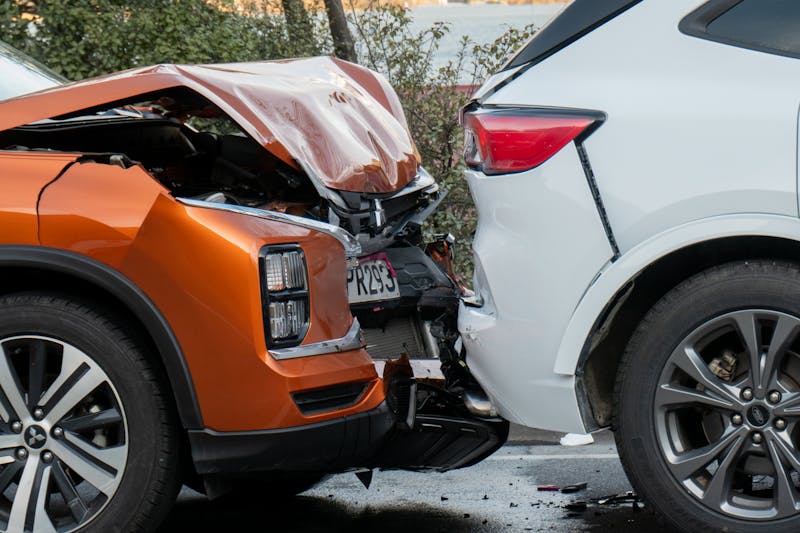
In a chain-reaction crash, fault is divided based on each driver’s actions; it’s not automatically assigned to just one person. Under South Carolina negligence law, liability is determined by examining who failed to act reasonably at each point in the sequence, and more than one driver can be held responsible.
For example:
- A driver who rear-ends another may be at fault for starting the crash
- A following driver who was speeding or distracted may share responsibility for making it worse
- And in some cases, multiple drivers are each assigned a percentage of fault
Gus Anastopoulo Law Firm handles complex multi-vehicle accident cases across South Carolina. We break these crashes down step by step—who moved when, who had time to react, and where responsibility actually falls—then build a case that holds up under real scrutiny.
In this guide, we’ll explain how liability is divided, what evidence determines fault, and what you need to protect your claim after a multi-vehicle crash.
Why Chain-Reaction Crashes Are So Complex
Unlike a two-car accident, chain-reaction crashes involve multiple points of impact and multiple decisions made in seconds. That creates three major challenges:
- Conflicting accounts from multiple drivers
- Overlapping causes (speed, distraction, weather, spacing)
- Insurance companies pointing fingers in every direction
Legally, each driver’s actions are evaluated separately. Courts look at whether each person acted reasonably under the circumstances and whether their conduct contributed to the crash.
How Fault Is Divided in Multi-Vehicle Accidents
In South Carolina, fault is divided using modified comparative negligence. That means:
- Each driver is assigned a percentage of fault
- Your compensation is reduced by your percentage
- If you are more than 50% at fault, you recover nothing
This rule comes from South Carolina case law, including Nelson v. Concrete Supply Co.
In a chain-reaction crash, that division might look like:
- Driver A initiated the crash and is 60% at fault
- Driver B is 30% at fault for following too closely
- Driver C had a delayed reaction and is 10% at fault
Common Chain-Reaction Crash Scenarios
Rear-End Pileups
These often start with one driver failing to stop in time, but additional drivers may share fault if they:
- Were following too closely
- Were distracted
- Or failed to adjust to traffic conditions
Drivers are expected to maintain a safe following distance and control their speed to avoid collisions (South Carolina Code §56-5-1930).
Highway Sudden Stops
When traffic slows suddenly, multiple vehicles may collide in sequence. Fault depends on:
- Reaction time
- Speed
- Following distance
Drivers who fail to adapt to changing conditions may be held partially responsible.
Weather-Related Chain Collisions
- Rain, fog, or ice can reduce visibility and traction, but they don’t eliminate responsibility.
- Drivers must adjust their behavior to conditions, including reducing speed and increasing following distance (South Carolina Code §56-5-1520).
Multi-Lane Impact Crashes
Some chain-reaction crashes spread across lanes when drivers:
- Swerve suddenly
- Lose control
- Or react unpredictably
Fault may extend to multiple drivers depending on how each contributed to the sequence.
Proving Liability
Duty of care
- Every driver on the road is required to operate their vehicle safely—maintaining awareness, controlling speed, and adjusting to traffic conditions
- This baseline duty is rarely disputed
- What matters is how each driver acted within the sequence, which is established through police reports, witness statements, and available video evidence that show what was happening leading up to the crash
Breach of that duty
- A breach happens when a driver fails to meet that obligation—following too closely, reacting too late, or not paying attention to changing traffic conditions
- In multi-vehicle crashes, these failures stack up
- Identifying them relies on vehicle damage patterns and scene evidence, which help show who failed to stop, who made contact first, and who contributed to additional impacts
Causation
- This is where the sequence gets broken down
- It’s not enough to show a mistake—you have to show how that mistake affected what happened next
- Crash timing, impact order, and footage (if available) are critical here
- They allow the crash to be reconstructed step by step, separating the initial cause from the drivers who made the outcome worse
Damages
- Finally, the harm has to be clearly tied to the crash
- That includes injuries, medical treatment, lost income, and property damage
- In multi-impact collisions, this can require connecting specific injuries to specific points in the sequence, using medical records, repair data, and supporting documentation to show how the crash affected you
What You Should Do After a Multi-Vehicle Crash
If you’re involved in a chain-reaction accident:
- Take photos of all vehicles and positions
- Document the sequence as best you can
- Get contact information for all drivers and witnesses
- Seek medical attention immediately
- Avoid giving recorded statements to insurers without guidance
Fault Isn’t Split Evenly. It’s Built Case by Case.
In chain-reaction crashes, liability is assigned based on evidence, timing, and responsibility at each moment of the crash. That means your outcome depends on how clearly your role is established.
At Gus Anastopoulo Law Firm, we approach multi-vehicle crashes with the level of detail they demand. We analyze how the crash unfolded, identify every contributing factor, and build a case that reflects what actually happened.
If you’ve been involved in a chain-reaction crash and there’s any question about fault, don’t leave that decision to the insurance companies. Call Gus Anastopoulo Law Firm today for a free case evaluation.