


Get the Lawyer Who Won’t Back Down
If you’ve been injured, don’t accept the insurance company’s first offer. Get the team who makes them pay you what they should.
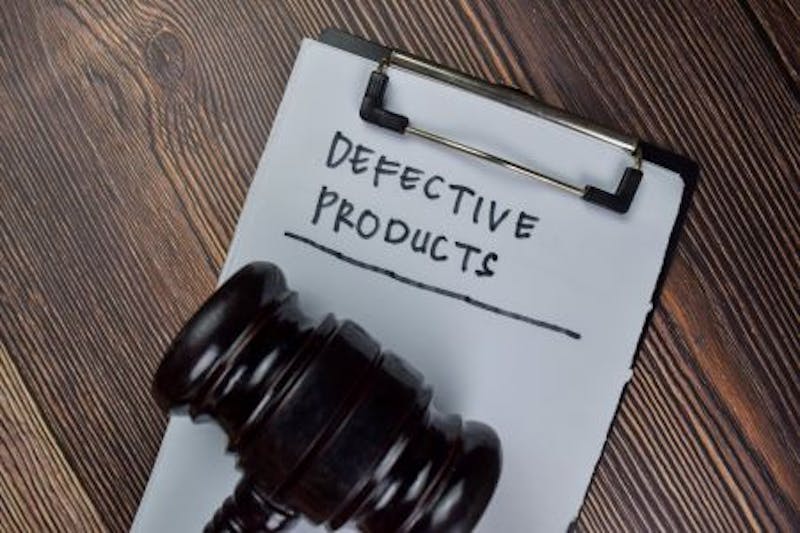
There is no set average value for a defective product claim in Charleston, and any number quoted without knowing the facts of your case should be treated with skepticism. South Carolina law recognizes three categories of product defects: design defects, manufacturing defects, and failure-to-warn (or marketing) defects.
Under South Carolina's strict liability doctrine, an injured person need not prove the manufacturer was negligent, only that the product was sold in an unreasonably dangerous condition and that the defect caused the injury.
At Gus Anastopoulo Law Firm, our attorneys build defective product claims by identifying exactly which type of defect caused the harm and every party in the supply chain who may share responsibility. That groundwork is what actually determines what a claim is worth, not a generic average.
Our team includes attorneys with backgrounds in personal injury and mass tort litigation, which matters because product liability cases often require coordinating evidence across multiple injured parties or an existing multidistrict litigation docket, not just building a single standalone claim. We take the same investigative approach on defective product cases that we apply across every practice area: dig into internal company records, testing history, and prior complaints before the manufacturer's legal team has a chance to control the narrative.
In this blog, we break down exactly what goes into valuing a defective product claim, and what you can do to protect yours.
South Carolina courts recognize three distinct categories of product defects, and identifying the right one shapes how a claim is built:
South Carolina allows product liability claims to proceed under a strict liability theory, meaning the injured person need not prove the manufacturer or seller was careless.
Instead, the claim generally requires showing that:
Claims can also be brought under a negligence theory, which instead requires proof that the manufacturer failed to exercise reasonable care. Because strict liability does not require proof of carelessness, it is often the more direct path for an injured consumer, though the right approach depends on the specific facts of the case.
Several factors shape what a defective product claim is realistically worth. The severity of the injury drives much of the value; for example, more extensive injuries generally mean:
Proving damages matters just as much as the injury itself:
If the injured person shares any percentage of fault under South Carolina's modified comparative negligence rule, codified at S.C. Code § 15-38-15, their recovery may be reduced accordingly, or barred entirely if their fault reaches 51 percent or more.
Liability for a defective product is not limited to the company whose name appears on the box. Depending on how the defect arose, any of the following may be held responsible:
Identifying every liable party matters because it affects both the available insurance coverage and the total compensation that may be recoverable.
South Carolina generally does not cap compensatory damages, such as medical expenses and lost wages, in most product liability cases.
Punitive damages, however, are capped under S.C. Code § 15-32-530 at the greater of three times the compensatory damages awarded or $500,000, with limited exceptions that allow a higher cap when a defendant's conduct was especially egregious.
These caps make it even more important to document and pursue every available category of compensatory damages fully.
Manufacturers rarely admit fault without a fight, which is why you work directly with your attorney at Gus Anastopoulo Law Firm rather than getting passed off to a case manager, from the first consultation through resolution. The firm has recovered tens of millions of dollars for injured clients across South Carolina, and every case is prepared as though it is headed to trial, so the manufacturer's legal team knows a quick, lowball offer will not end the conversation.
There are no upfront costs to hire us, since we only get paid if you recover compensation, and we keep clients informed at every stage rather than leaving them to track down updates on their own. Contact our Charleston office today for a free consultation if you or a loved one has been injured by a defective product.
Disclaimer: The information on this page is provided for general educational purposes only and does not constitute legal advice. Every case is different. Past results do not guarantee future outcomes.
If you’ve been injured, don’t accept the insurance company’s first offer. Get the team who makes them pay you what they should.